Search term must have more than 2 characters.

Healthy diet
Too Many Vitamins? Even Healthy Things Can Be Harmful. A Real Client Story as a Warning
Vitamins are essential for good health, but too much can harm the body. This article explains the risks of high doses of vitamins D, A, E, K2 and selected B vitamins, highlights the dangers of combining supplements and advises when supplementation should be discussed with a doctor or pharmacist.
We associate vitamins with health. The more, the better? Quite the opposite. In the era of “mega-doses,” recommendations from the internet and over-the-counter supplements, it is easy to overdo even something that is supposed to support health. Vitamin overdose is not as common as vitamin deficiency, but its consequences can be serious – and often overlooked.
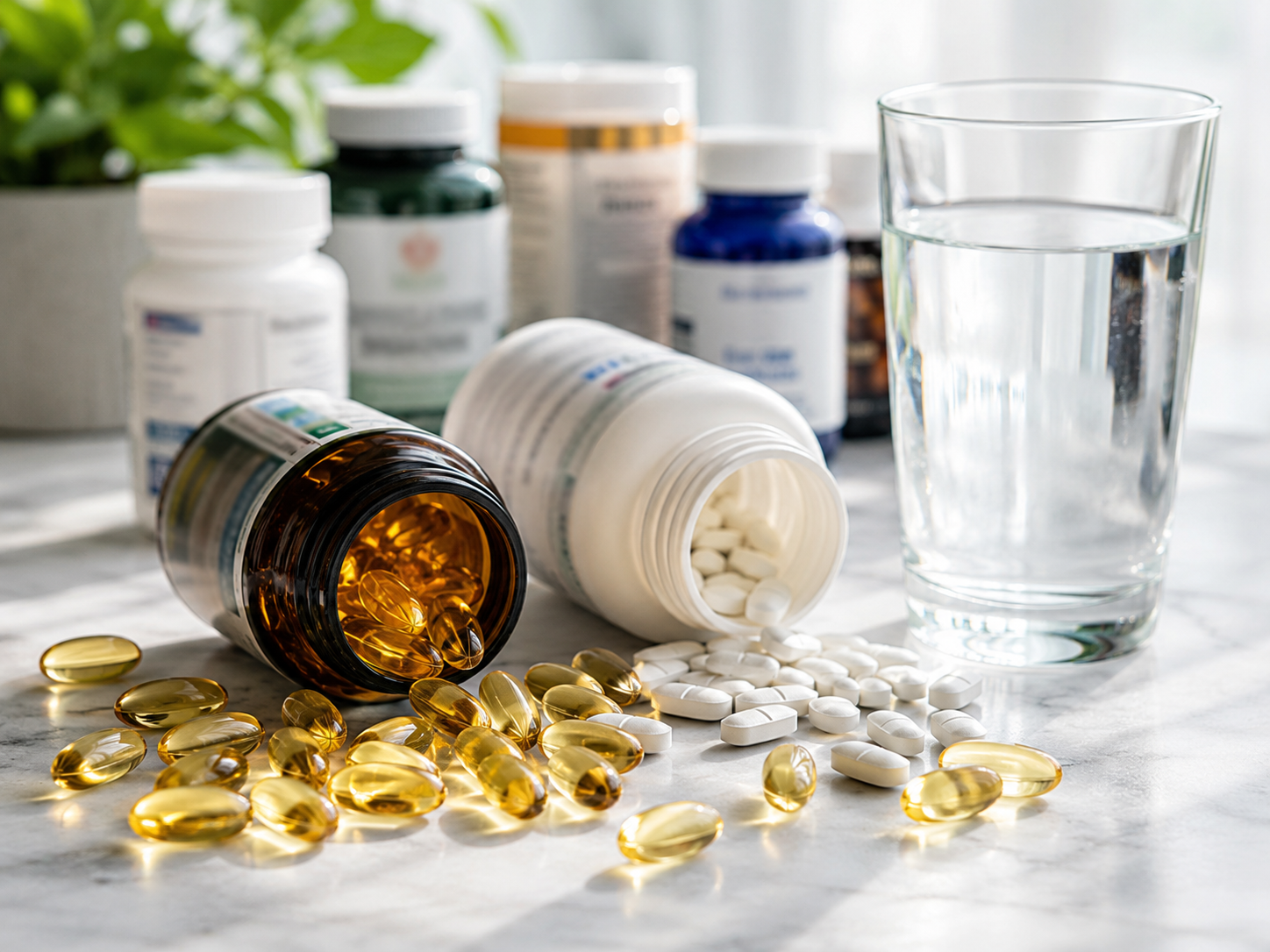
Which Vitamins Can Put You at Risk?
Vitamin D
- What can happen: Calcium deposits in blood vessels and soft tissues, kidney stones, arrhythmia, fatigue, vomiting.
- A common mistake: Taking 5000–10,000 IU daily “just to be safe” over a long period without laboratory monitoring.
Vitamin A
- Risks: Liver damage, headaches, hair loss, blurred vision.
- Greatest risk: Retinol from animal sources and supplements (not beta-carotene).
- Critical period: Pregnancy – there is a risk of harm to the fetus.
Vitamin E
- What can happen: Increased risk of bleeding, fatigue, muscle weakness.
- Reason: As a fat-soluble vitamin, it is stored in the body.
Vitamin K2
- Low risk, but high doses may interfere with the effects of blood-thinning medication.
B Vitamins
- They are usually excreted in urine, but there are exceptions:
- B6 (pyridoxine): At doses above 100 mg per day, neuropathy may occur – tingling and loss of sensation.
- Niacin (B3): High doses can cause flushing as well as liver damage.

A Real-Life Story: “I Was Doing Everything Right – and Still Poisoned Myself with Vitamins”
Client Jana (45) came to me with chronic fatigue, joint pain and stomach problems. During a detailed consultation, it became clear that she had been taking 8000 IU of vitamin D daily for about a year because “it was recommended to her on social media.” However, she had never had her blood levels checked. Laboratory tests showed a vitamin D level well above the upper limit (over 180 nmol/l) and elevated blood calcium. The diagnosis? Chronic vitamin D intoxication with calcium deposits in the kidneys. It required treatment and discontinuation of all supplements for several months.
Jana was shocked – “I just wanted to be healthy.”
How to Prevent “Vitamin Poisoning”?
- Test before you start supplementing. Vitamin D, B12, iron or vitamin A can commonly be tested in a laboratory.
- Targeted supplementation. Take only the vitamins you actually need and in doses appropriate for your condition.
- Be careful with multivitamins. Daily doses can add up unexpectedly, especially if you take several supplements at the same time.
- Listen to your body. Nausea, fatigue, skin rashes or headaches may be signs of intoxication.
- Consult a professional – this is the best advice to end with.
Author: Ing. Eva Kocurková